
Financial Word of the Day: Asset

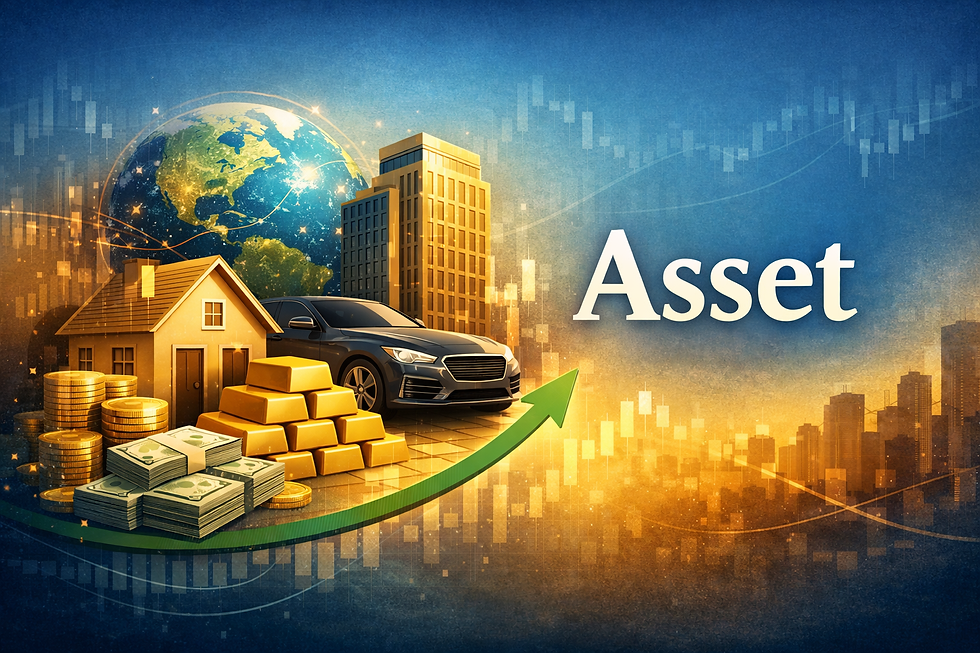
Definition of Asset
An asset is anything you own that has value and can produce income, appreciate over time, or be converted into cash.
In simple terms: An asset is something that puts money in your pocket—or has the strong potential to.
Not everything you own is an asset. Some things look impressive… but quietly drain your bank account every month. That’s a different word for a different day.
Why The Word Asset Matters
If you want to build wealth, you must become fluent in one core idea: Wealth is built by accumulating assets, not by increasing income alone. Income is important, but income is temporary. Assets are what turn income into long-term freedom.
The average person focuses on:
Salary
Promotions
Cutting expenses
Wealthy individuals focus on:
Acquiring income-producing assets
Holding appreciating assets
Using assets as leverage to buy more assets
See the difference?
One group works for money. The other group builds systems that make money work for them.
Types of Assets
Here are a few common examples:
Stocks and ETFs – Ownership in companies that can grow and pay dividends
Real Estate – Property that appreciates and/or produces rental income
Businesses – Income-generating enterprises
Intellectual Property – Books, courses, music, patents
Cash and Cash Equivalents – Liquid funds with purchasing power
Retirement Accounts – 401(k)s, IRAs invested in appreciating assets
Even skills can function like assets if they increase your earning power over time.
The key question is always: Does this item increase in value or produce income?
If yes — likely an asset. If no — likely a liability (even if it looks shiny in your driveway).

How Asset Is Used in Conversation
“I’m shifting my focus from buying stuff to buying assets.”
“We used the bonus to purchase an income-producing asset instead of upgrading the car.”
“Our goal this year is to add two new assets to our portfolio.”
That language alone changes how you think.
Asset vs. Expense Thinking
Most people spend first and invest what’s left. Asset thinkers invest first and spend what’s left. That one mental shift can change your financial trajectory.
When money comes in, ask:
Can I turn this into an asset?
Will this purchase grow or shrink my net worth?
Does this move me closer to financial independence?
Practical Takeaway
Today, take 10 minutes and list everything you own.
Now divide the list into two columns:
Assets
Non-assets
Don’t judge. Just observe. The goal isn’t guilt. The goal is clarity.
Once you see the difference, you can start redirecting future dollars toward things that build momentum instead of maintenance.
Final Thought
An asset is more than a financial term. It’s a mindset shift.
When you begin thinking like an asset builder instead of a consumer, you stop trading time for money—and start building machines that generate money for you. And that’s when things get interesting.
Tomorrow, we’ll build on this foundation. Because once you understand assets… you start seeing opportunities everywhere.



Comments