
Financial Word of the Day: Credit Card

Introduction
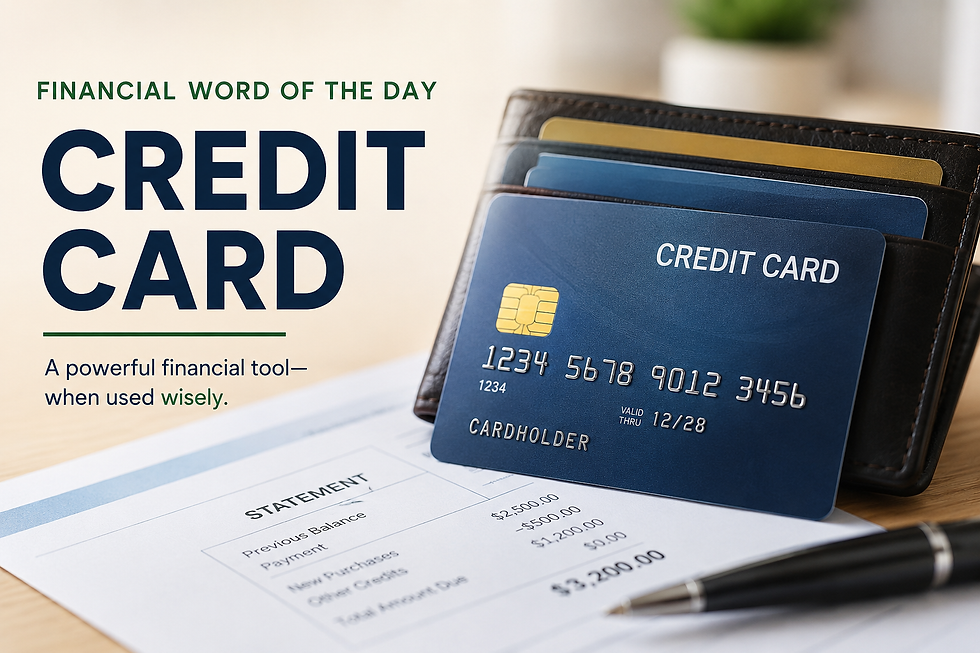
A credit card is a financial tool that allows you to borrow money from a bank or financial institution to make purchases, with the agreement that you’ll repay what you borrow.
That sounds simple enough. But a credit card can be either a powerful financial tool or an extremely expensive way to spend money. The difference comes down to how you use it.
What Is a Credit Card?
When you use a debit card, money generally comes directly out of your bank account. When you use a credit card, you’re borrowing the card issuer’s money.
Every credit card has a credit limit, which is the maximum amount the lender allows you to borrow. Each month, you receive a statement showing your purchases, your balance, your minimum payment, and the date your payment is due.
If you pay your statement balance in full by the due date, you can generally avoid paying interest on purchases, assuming your card provides the standard grace period.
Carry a balance, however, and things can get expensive quickly.
A Simple Example of Using a Credit Card
Suppose you use your credit card to purchase a $1,500 laptop.
If you pay the entire $1,500 statement balance by the due date, you may pay $0 in interest.
But suppose you make only the minimum payment and carry that balance for months. With many credit cards charging relatively high interest rates, that $1,500 computer can eventually cost considerably more than $1,500.
That’s why financially savvy people understand an important distinction:
Using a credit card is not the same thing as having money. It is access to borrowed money.

Why Credit Cards Can Be Useful
Used responsibly, credit cards can provide several advantages. They can make purchases convenient, provide fraud protection, help establish a strong credit history, and sometimes provide cash back, points, travel rewards, or other benefits.
They can also help demonstrate responsible credit management to future lenders.
The key word is responsibly.
One of the best ways to use a credit card is to treat it like a debit card: Don’t charge something unless you already have the money available to pay for it. Then pay the statement balance in full every month.
How to Use the Word "Credit Card" in Conversation
You might hear someone say: "I use my credit card for most monthly expenses to earn rewards, but I pay the statement balance in full every month so I don't carry credit card debt."
That statement shows an understanding of the difference between using credit and depending on credit.
Why A Credit Card Matters to Your Money
Credit cards themselves aren't necessarily good or bad. They’re tools.
Used poorly, they can create high-interest debt that works against your ability to build wealth.
Used wisely, they can provide convenience, protection, rewards, and help strengthen your credit profile without costing you interest.
Here’s the bigger financial principle: If you pay credit card interest month after month, your money is working for the lender. If you use the card strategically and avoid interest, you keep more of your money working for you.
Learning to speak the language of money means understanding not just what financial products are—but how to make them work in your favor.
Today’s takeaway: A credit card gives you access to borrowed money. Use it as a payment tool, not as permission to spend money you don't have.


Comments