
Financial Word of the Day: Swing Trading
- Larry Jones

- Nov 3, 2025
- 2 min read
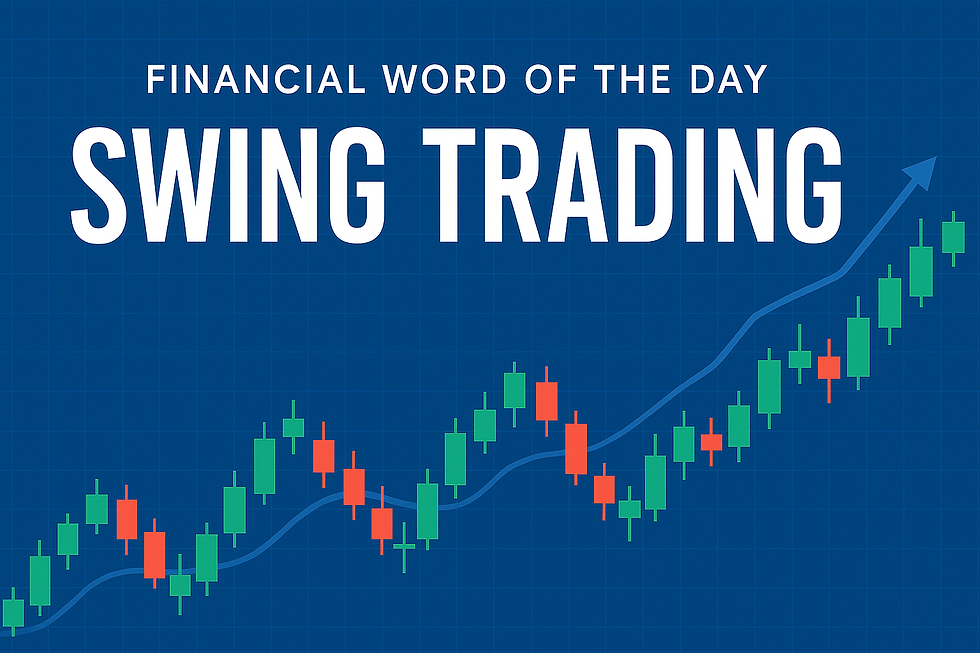
Definition of Swing Trading
Swing trading is a short- to medium-term trading strategy that aims to capture “swings” in a stock, ETF, or crypto asset’s price over a few days to several weeks. Unlike day traders who enter and exit within a single day, swing traders hold positions longer to ride momentum—buying when prices are poised to rise and selling when the trend starts to slow or reverse.
The goal is simple: capitalize on market waves without being glued to a screen all day.
How Swing Trading Works
Swing traders typically use a mix of technical analysis (chart patterns, moving averages, RSI indicators) and market sentiment to time their entries and exits. The strategy sits between day trading (fast-paced and stressful) and long-term investing (patient and steady).
Think of it as the “Goldilocks zone” of trading—not too short, not too long.
For example:Let’s say a stock, XYZ Corp, has been trading between $45 and $55 for several months. A swing trader notices momentum building after a strong earnings report and buys at $47, anticipating a move back toward $55. A week later, when the stock hits $54, they sell for a quick profit.
It’s not gambling—it’s strategic surfing on price waves created by news, momentum, and market psychology.
Why Swing Trading Matters
Swing trading attracts both part-time traders and investors who want action without burnout. You can trade a few times a week, watch trends unfold, and aim for profits that beat buy-and-hold returns—all while still having a life outside the charts.
However, swing trading isn’t a guaranteed money machine. It requires:
Discipline — sticking to a plan, not emotions.
Risk management — knowing when to cut losses.
Patience — letting winning trades run their course.
Many beginners lose money not because the strategy doesn’t work—but because they trade too often, ignore stop losses, or chase every price move. Successful swing traders know their setups, trust their systems, and avoid FOMO (fear of missing out).
In Real Life
Imagine you hear someone say, “I made a quick 8% last week swing trading Apple after that product launch.” What they mean is: they bought shares expecting a short-term bump in price, held them for several days, and sold when the momentum cooled.
Swing trading works best in markets with healthy volatility—enough movement to create opportunities, but not so wild that you get wiped out by random swings.
Bottom Line
Swing trading can be a fun, flexible, and profitable approach for people who understand the market’s rhythm. You don’t need to be a full-time trader—but you do need to treat it like a business, not a hobby.
Learn the charts. Manage your risks. Ride the wave—then get off before it crashes.



Comments